
In today's competitive legal landscape, law firms are increasingly turning to marketing automation to enhance client engagement, streamline operations, and drive growth. By automating repetitive tasks and personalizing client interactions, firms can focus more on delivering exceptional legal services.
Key Findings
-
Enhanced Efficiency: Automating routine tasks such as email follow-ups, appointment scheduling, and social media postings allows law firms to allocate more time to client-focused activities.
-
Improved Client Engagement: Personalized and timely communication through automated workflows fosters stronger relationships and increases client satisfaction.
-
Data-Driven Decision Making: Marketing automation tools provide valuable insights into client behaviors and campaign performance, enabling firms to refine their strategies effectively.
-
Consistent Branding: Automation ensures uniform messaging across various channels, maintaining a cohesive brand image.
-
Scalability: As firms grow, marketing automation systems can adapt to increased demands without compromising quality or efficiency.
How Can Marketing Automation Enhance Client Acquisition for Law Firms?
Marketing automation empowers law firms to streamline client acquisition by automating repetitive tasks, personalizing outreach, and optimizing marketing strategies. This approach enhances efficiency and fosters stronger client relationships.
Key Benefits of Marketing Automation for Law Firms:
-
24/7 AI-Powered Chatbots: Implementing AI-driven chatbots on your website ensures immediate engagement with potential clients, regardless of the time. These chatbots can answer common questions, qualify leads, and schedule consultations, ensuring no opportunity is missed.
-
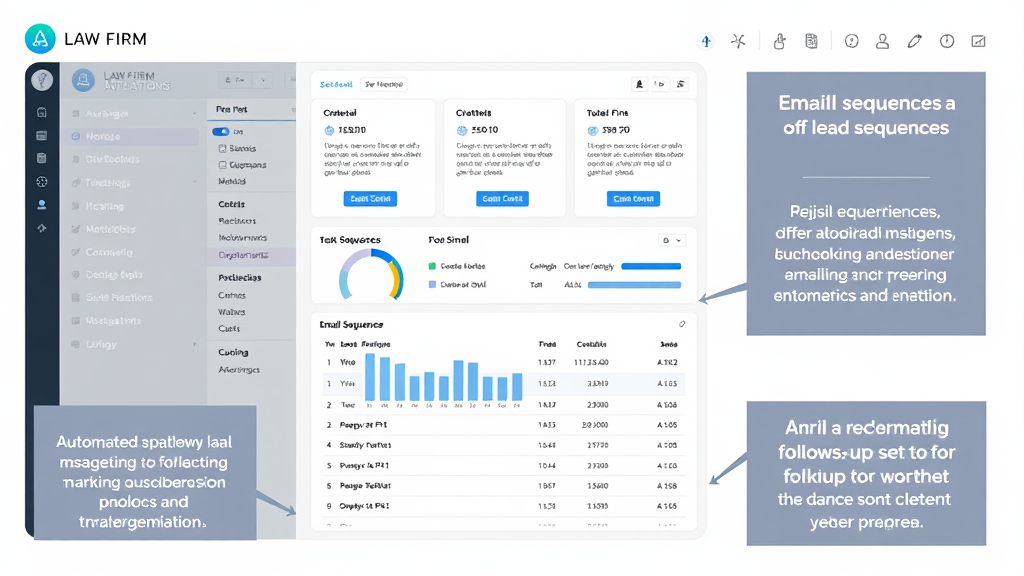
Automated Email and SMS Follow-Ups: Automating follow-up communications allows for timely and personalized interactions with prospects. By setting up email sequences or SMS messages triggered by specific actions, law firms can nurture leads effectively without manual intervention.
-
Lead Scoring and Segmentation: Marketing automation tools can assess and rank leads based on their engagement levels, enabling firms to prioritize high-value prospects. Segmenting leads allows for tailored communication strategies that resonate with different client groups.
-
Automated Appointment Scheduling: Integrating automated scheduling systems enables clients to book consultations directly through the firm's website, reducing back-and-forth communication and enhancing the client experience.
-
Data-Driven Decision Making: Marketing automation platforms provide real-time analytics on campaign performance, client behaviors, and lead quality. This data empowers law firms to refine their marketing strategies and allocate resources more effectively.
By adopting marketing automation, law firms can enhance their client acquisition processes, ensuring timely and personalized interactions that build trust and drive conversions.
External Sources: Learn More
Transform your business with effortless automation—experience ipsom.io or connect with us at office@ipsom.io.
What Are the Key Features of Effective Marketing Automation Tools for Legal Practices?
Effective marketing automation tools tailored for legal practices offer several key features that enhance client engagement, streamline operations, and improve overall marketing efficiency.
Automated Email Campaigns
These tools enable law firms to design and manage email campaigns using intuitive drag-and-drop editors and customizable templates. By setting up triggers and logical workflows, firms can deliver timely, personalized messages to clients and prospects, fostering stronger relationships and guiding them through the client journey.
Lead Nurturing and Scoring
Marketing automation platforms assist in nurturing leads by sending targeted communications based on individual client needs and behaviors. They also assign scores to leads, allowing firms to prioritize follow-ups with the most promising prospects, thereby optimizing conversion rates.
Client Intake and Onboarding Automation
Streamlining the client intake and onboarding process is crucial for a positive client experience. Automation tools facilitate this by utilizing online forms and questionnaires to collect essential information efficiently. Subsequent automated communications keep clients informed and engaged throughout the onboarding phase.
AI-Powered Email and CRM Automation
Integrating artificial intelligence (AI) into email and customer relationship management (CRM) systems transforms how law firms interact with clients. AI enables audience segmentation, personalized outreach, and automated follow-ups, ensuring consistent and relevant communication. This approach enhances client engagement and retention.
Comprehensive Analytics and Performance Tracking
Robust analytics and reporting features are essential for evaluating the effectiveness of marketing efforts. Automation tools provide detailed insights into various metrics, allowing firms to monitor campaign performance and make data-driven decisions to refine their strategies.
Compliance and Security Features
Given the sensitive nature of legal work, marketing automation tools must adhere to strict compliance standards and offer robust security measures. Ensuring that platforms comply with regulations such as GDPR and HIPAA is vital to protect client information and maintain trust.
By leveraging these features, law firms can enhance their marketing strategies, improve client relationships, and drive growth through efficient and personalized communication.
External Sources: Learn More
How Does Marketing Automation Improve Lead Nurturing and Conversion Rates?
Marketing automation significantly enhances lead nurturing and conversion rates for law firms by streamlining communication, personalizing client interactions, and efficiently managing leads.
Automated Email Campaigns: Implementing automated email sequences allows law firms to deliver timely, relevant content to potential clients, guiding them through the decision-making process. For instance, a law firm that introduced structured nurture campaigns observed a 19.86% improvement in lead-to-opportunity conversion rates.
Personalized Communication: Marketing automation tools enable segmentation of leads based on specific criteria such as case type, engagement level, or geographic location. This segmentation facilitates the delivery of tailored messages that resonate with each lead's unique needs, thereby increasing the likelihood of conversion.
Efficient Lead Management: By automating repetitive tasks like follow-ups and appointment scheduling, law firms can ensure consistent engagement with potential clients. This not only saves time but also ensures that no lead is overlooked, enhancing the overall client acquisition process.
Incorporating marketing automation into a law firm's operations leads to more effective lead nurturing strategies, ultimately resulting in higher conversion rates and improved client relationships.
External Sources: Learn More
What Role Does Audience Segmentation Play in Law Firm Marketing Automation?
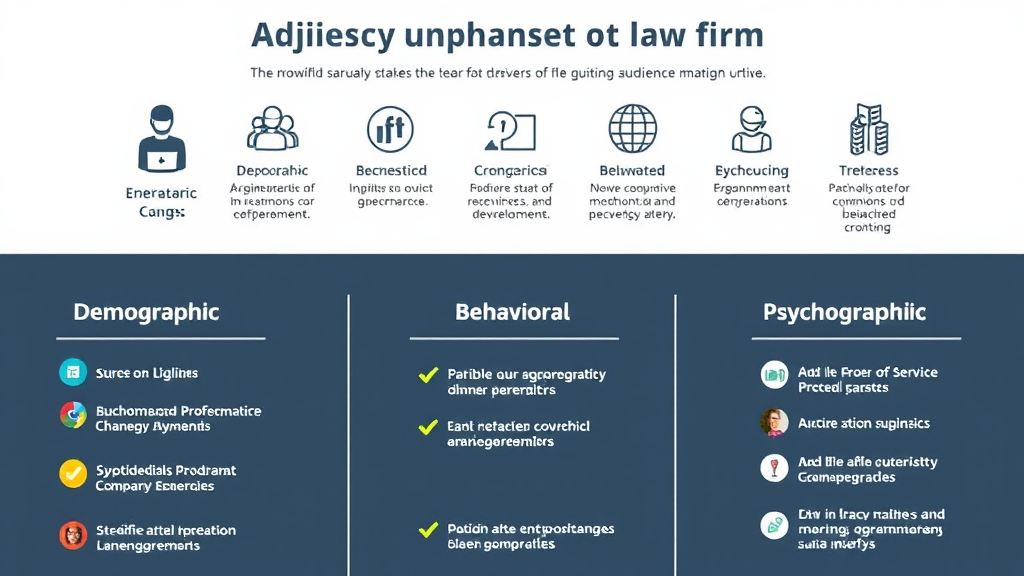
Audience segmentation is a pivotal component of law firm marketing automation, enabling firms to deliver personalized and relevant communications to distinct client groups. By categorizing clients based on specific criteria, law firms can enhance engagement, improve client satisfaction, and increase conversion rates.
Key Aspects of Audience Segmentation:
-
Demographic Segmentation: This involves grouping clients by quantifiable characteristics such as age, gender, income level, education, and occupation. For instance, family law services may appeal more to clients in certain age ranges or marital statuses.
-
Behavioral Segmentation: This focuses on clients' interactions with the firm, including their purchasing habits, responsiveness to marketing, and service usage. Analyzing patterns such as frequent inquiries regarding estate planning can help tailor marketing strategies and enhance client satisfaction.
-
Psychographic Segmentation: This delves into clients' values, beliefs, and lifestyles. For example, a law firm may target environmentally conscious clients by highlighting its commitment to sustainable practices.
Benefits of Implementing Audience Segmentation:
-
Personalized Communication: By understanding the specific needs and preferences of each segment, law firms can craft messages that resonate more deeply, leading to higher engagement rates.
-
Efficient Resource Allocation: Targeted marketing efforts ensure that resources are directed toward the most receptive audiences, optimizing marketing spend and efforts.
-
Enhanced Client Relationships: Tailored communications demonstrate a firm's attentiveness to client needs, fostering trust and loyalty.
Incorporating audience segmentation into marketing automation strategies allows law firms to move beyond generic outreach, offering clients information and services that are directly relevant to their unique situations.
External Sources: Learn More
Transform your operations with ease—unlock the potential at ipsom.io or get in touch at office@ipsom.io.
How Can Law Firms Integrate AI and Machine Learning into Their Marketing Automation Strategies?
Integrating Artificial Intelligence (AI) and Machine Learning (ML) into marketing automation enables law firms to enhance client engagement, optimize marketing efforts, and improve overall efficiency.
Predictive Analytics for Lead Scoring
AI analyzes website traffic, engagement metrics, and past client behaviors to identify high-quality leads. This allows law firms to prioritize outreach to prospects most likely to convert, reducing marketing spend and improving efficiency.
AI-Driven Content Creation
AI tools assist in generating high-quality, optimized blog posts, newsletters, and social media content that address client concerns and increase visibility. This streamlines content creation, ensuring consistency and relevance.
Automated Email Campaigns
AI-powered email marketing platforms automate tasks such as sending follow-up emails, scheduling campaigns, and managing outreach workflows. This reduces manual work, enhances client outreach consistency, and improves engagement.
AI-Powered PPC Advertising
AI enhances pay-per-click (PPC) advertising by dynamically adjusting bids based on conversion likelihood, predicting high-intent users, refining ad copy, and preventing wasted spend from competitor clicks and bots. This ensures effective allocation of marketing budgets.
AI Chatbots for Client Interaction
AI-driven chatbots provide 24/7 support, answering FAQs, qualifying leads, and scheduling consultations. This immediate engagement improves client experience and increases conversion rates.
AI-Driven Video Marketing
AI tools assist in video tagging, classification, and automate video editing and post-production tasks. This streamlines the video creation process, enhancing the efficiency and effectiveness of video marketing efforts.
By integrating AI and ML into marketing automation, law firms can achieve more personalized client engagement, efficient marketing operations, and improved return on investment.
External Sources: Learn More
Unlock your potential with seamless automation—visit ipsom.io or connect with us at office@ipsom.io.
What Are the Challenges Law Firms Face When Implementing Marketing Automation?
Implementing marketing automation in law firms offers numerous benefits, but it also presents several challenges that need to be addressed for successful integration.
Data Privacy and Security Concerns
Law firms handle sensitive client information, making data privacy a paramount concern. Implementing marketing automation tools requires strict adherence to data protection regulations such as GDPR and HIPAA. Ensuring secure data storage, implementing consent mechanisms for data collection, and regularly auditing data practices are essential steps to maintain compliance and client trust.
Integration with Existing Systems
Many law firms utilize a combination of legacy software and modern applications, which can complicate the seamless integration of marketing automation tools. Ensuring compatibility between these systems is crucial to avoid data discrepancies and inefficiencies. This often requires additional resources and time to achieve a fully integrated solution.
Over-Reliance on Automation
While automation enhances efficiency, excessive dependence can lead to impersonal client interactions. Maintaining a balance between automated processes and personal engagement is vital to preserve the human touch that clients expect from legal professionals.
Resource Constraints and Lack of Expertise
Smaller law firms may face challenges due to limited resources, time, and in-house marketing expertise. This can result in ineffective marketing strategies and missed opportunities. Investing in training, prioritizing marketing activities, and considering outsourcing certain tasks can help overcome these obstacles.
Measuring Return on Investment (ROI)
Assessing the effectiveness of marketing automation efforts can be complex. Establishing clear goals and key performance indicators (KPIs) is essential for measuring success. Regular analysis of metrics such as lead conversion rates and client retention helps refine strategies and enhance ROI.
By proactively addressing these challenges, law firms can effectively implement marketing automation to enhance client engagement and operational efficiency.
External Sources: Learn More
Transform your business with effortless automation—visit ipsom.io or get in touch at office@ipsom.io.
FAQ – Frequently Asked Questions
How does marketing automation benefit law firms?
Marketing automation offers several advantages for law firms:
-
Improved Efficiency: Automating repetitive tasks like email campaigns and social media management frees up time for higher-value activities.
-
Enhanced Client Engagement: Automated, personalized communications ensure consistent and timely interactions, leading to improved client satisfaction and loyalty.
-
Effective Lead Nurturing: Automated follow-ups and targeted messaging help move prospects through the sales funnel until they’re ready to hire.
-
Data-Driven Insights: Automation tools provide valuable analytics, enabling law firms to optimize their campaigns based on real-time data and performance metrics.
-
Cost Savings and ROI: By reducing manual labor and enabling precise targeting, automation tools ensure that your marketing budget is not just spent but invested.
Implementing marketing automation can transform a law firm's marketing efforts by streamlining processes and improving client engagement.
What tasks can be automated in a law firm's marketing strategy?
Law firms can enhance their marketing strategies by automating several key tasks:
-
Email Marketing: Automate personalized email campaigns, follow-ups, and newsletters to maintain consistent client communication.
-
Social Media Management: Schedule posts, curate content, and analyze engagement metrics to optimize social media presence.
-
Client Intake: Use automated forms and workflows to streamline the client onboarding process, ensuring efficient data collection and management.
-
Lead Management: Implement systems to capture, segment, and nurture leads through automated responses and follow-ups.
-
Appointment Scheduling: Allow clients to book consultations through automated scheduling tools, reducing administrative workload.
-
Client Communications: Send automated reminders, feedback requests, and personalized messages to enhance client engagement.
-
Content Management: Plan and publish content across platforms using automation tools to maintain a consistent online presence.
-
Reputation Management: Automate review requests and monitor feedback to maintain a positive online reputation.
By automating these tasks, law firms can improve efficiency, enhance client relationships, and focus more on delivering quality legal services.
How does audience segmentation improve marketing efforts?
Audience segmentation enhances marketing by enabling personalized messaging, improving customer retention, and increasing return on investment (ROI). By dividing the audience into specific groups, businesses can tailor their communications to address the unique needs and preferences of each segment, leading to higher engagement and conversion rates. This targeted approach also allows for more efficient resource allocation, focusing efforts on segments most likely to convert, thereby maximizing ROI. Additionally, understanding distinct customer segments aids in developing products and services that better meet their needs, fostering loyalty and satisfaction.
What are the challenges of implementing marketing automation in law firms?
Implementing marketing automation in law firms presents several challenges:
-
Data Quality and Management: Outdated or inaccurate client information can hinder automation efforts. Regularly updating and maintaining data is essential for effective campaigns.
-
Personalization: Over-reliance on automation may lead to impersonal client interactions. Balancing automated processes with a human touch is crucial to maintain client engagement.
-
Integration with Existing Systems: Ensuring that marketing automation tools seamlessly integrate with legacy legal practice management systems is vital to avoid operational disruptions.
-
Resource Constraints: Limited in-house marketing expertise and resources can impede the successful implementation of automation tools. Investing in training or outsourcing may be necessary.
-
Data Privacy and Security: Handling sensitive client information requires strict adherence to data protection regulations. Selecting platforms that prioritize security and compliance is imperative.
-
Ethical Considerations: Maintaining transparency and ethical standards in automated communications is essential to uphold client trust and comply with professional guidelines.
-
Regulatory Compliance: Law firms must navigate complex advertising and marketing regulations, which can vary by jurisdiction, to ensure compliance when implementing automation strategies.
Addressing these challenges requires strategic planning, investment in appropriate technologies, and a commitment to maintaining ethical and client-focused practices.
How can law firms measure the success of their marketing automation efforts?
Law firms can assess the effectiveness of their marketing automation efforts by tracking several key performance indicators (KPIs):
-
Client Acquisition Cost (CAC): Calculate the total marketing expenses divided by the number of new clients acquired within a specific period. This metric helps determine the cost-effectiveness of marketing strategies.
-
Lead Conversion Rate: Measure the percentage of leads that convert into paying clients. A low conversion rate may indicate issues in the intake process or the quality of leads generated.
-
Return on Marketing Investment (ROMI): Assess the revenue generated from marketing activities relative to the costs incurred. A positive ROMI indicates profitable marketing efforts.
-
Email Engagement Metrics: Monitor open rates, click-through rates, and unsubscribe rates to evaluate the effectiveness of email campaigns. High engagement suggests that content resonates with the audience.
-
Website Traffic and Landing Page Performance: Analyze the number of visitors, their sources, and behavior on the site. High bounce rates or low time-on-page may signal the need for content or design improvements.
-
Client Lifetime Value (CLV): Estimate the total revenue a client is expected to generate over their relationship with the firm. Understanding CLV aids in making informed marketing investment decisions.
-
Marketing Originated Client Percentage: Determine the proportion of new clients acquired directly through marketing efforts. This metric highlights the direct impact of marketing on client acquisition.
By consistently monitoring these KPIs, law firms can refine their marketing automation strategies to enhance efficiency and achieve better results.